Podcast: Private credit's monitoring machine

Kevin Hsu

Andrew Riess
My co-founder Andrew Riess and I joined Marc Andrew on Modern Capital from The Private Markets Forum. The episode is called "Private Credit's Monitoring Machine" - we recorded in September, a few days before we launched Lumonic 12.0 (the self-monitoring portfolio).

Why private credit
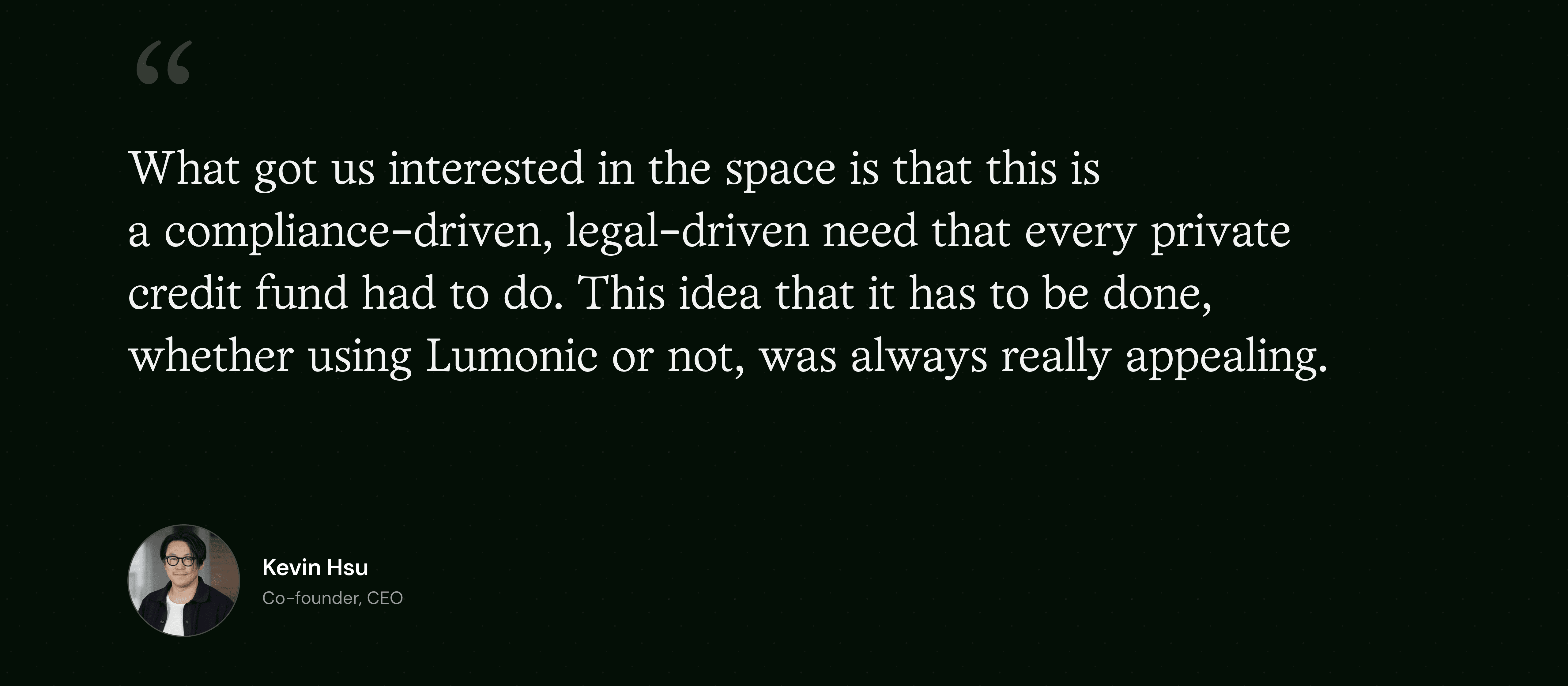
We started with private credit because it was the hardest asset class to monitor and the most underserved. Credit agreements set covenants, things a borrower has to do every period or can't do at all. Monitoring them is a legal requirement, but the few tools that existed were built for private equity or venture capital.
Once we solved for private credit, we realized we could solve for private equity and venture capital too, even though venture is hard in a different way. Andrew's point is about incentives - in venture, the companies happy to share their numbers are usually the ones doing fine. In credit, everything is contractual, so the borrowers you're worried about are obligated to report.
Three generations of portfolio monitoring
We covered the three generations of portfolio monitoring software because the most common complaint we hear from funds is "great, we have all this data, now what?" The first generation put the numbers on the internet, and that still impresses a lot of firms today. The second added a data warehouse and Excel plugins, which made reporting easier, but getting data in and out stayed manual.
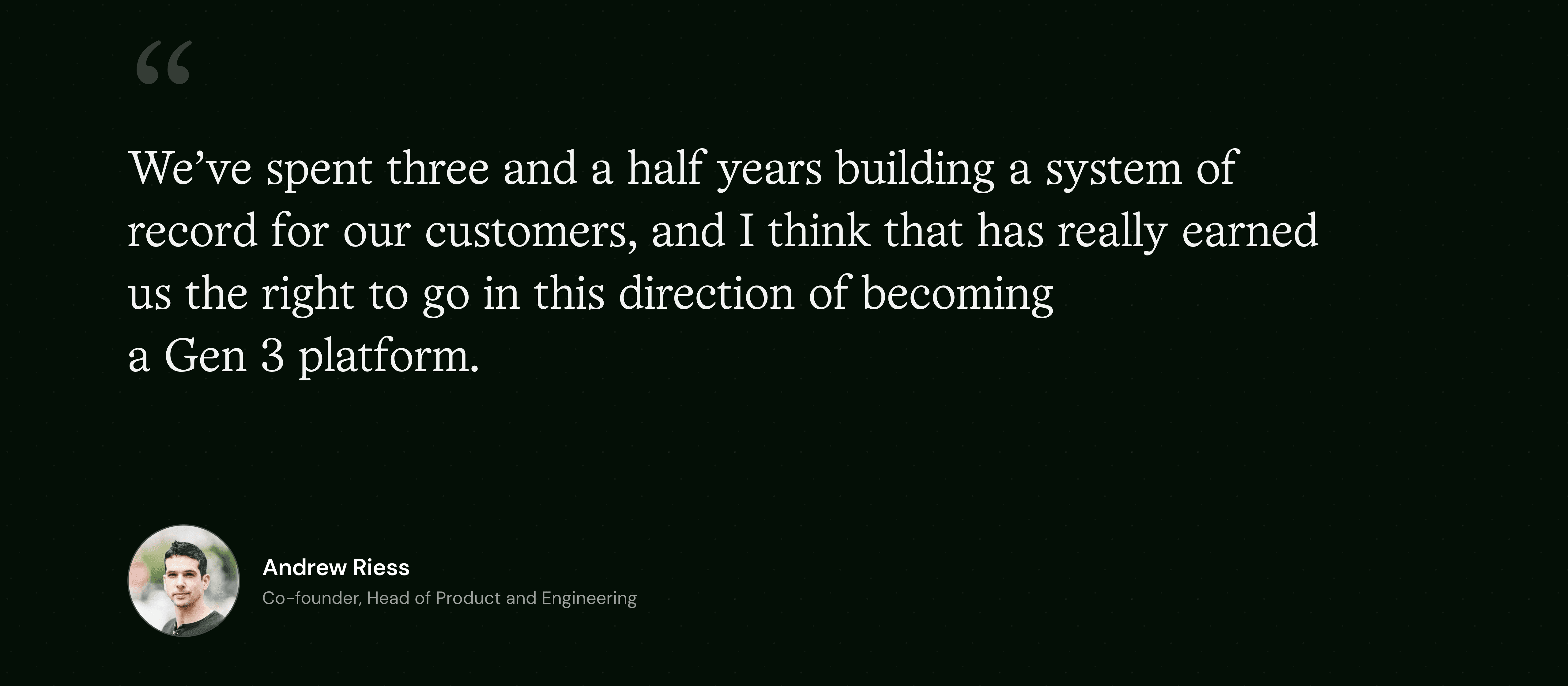
The third generation runs the process on its own. Documents are extracted and structured in the background with all the context of your firm's preferences - we call it the "self-monitoring portfolio." Lumonic 12.0 is the release that takes us into the third generation.
What is the moat
Marc asked why anyone should structure data if AI can read every document. Andrew's answer was "the moat is state," meaning data that's already structured and stored. A data point is only valuable if you can follow it back to the document it came from, especially when a borrower sends a last-twelve-months figure one month and a quarter the next.
For our customers, the audit trail matters most when someone asks where a number came from. A fund going through its annual audit can show the source page for every figure, and so can a registered investment adviser answering questions from regulators. The same numbers feed valuations, so every input behind a mark can be traced too.
Where is the market today
About 60% of the private credit funds we talk to are still in spreadsheets. Most of their AI trials are on underwriting and diligence, where there's no clear winner yet. Funds move more slowly on monitoring, since the numbers drive portfolio decisions and you can't be wrong.
I haven't seen AI change org charts yet, but I'm seeing more private credit and private equity funds hire chief technology officers. My advice to funds is to work out what problems the data needs to solve before jumping into AI. Andrew adds that it's never too early to start.
Listen to the full episode on Apple Podcasts or Spotify.
Thank you to Marc and the Private Markets Forum team for hosting us.


