How Trinity Capital automated portfolio review across five lending verticals

Parth Desai
The challenge
Trinity Capital's monthly and quarterly portfolio review process was built on individual effort. Each portfolio manager across the firm's five lending verticals (Health and Life Sciences, Sponsor Finance, Equipment Finance, Asset Based Lending, and Tech Lending) maintained their own Excel files, pulling figures into PDFs, keying bank balances by hand, and assembling one-pagers from scratch ahead of every review cycle. Covenant compliance lived in separate trackers. If someone questioned a number in a meeting, there was no audit back to the source.
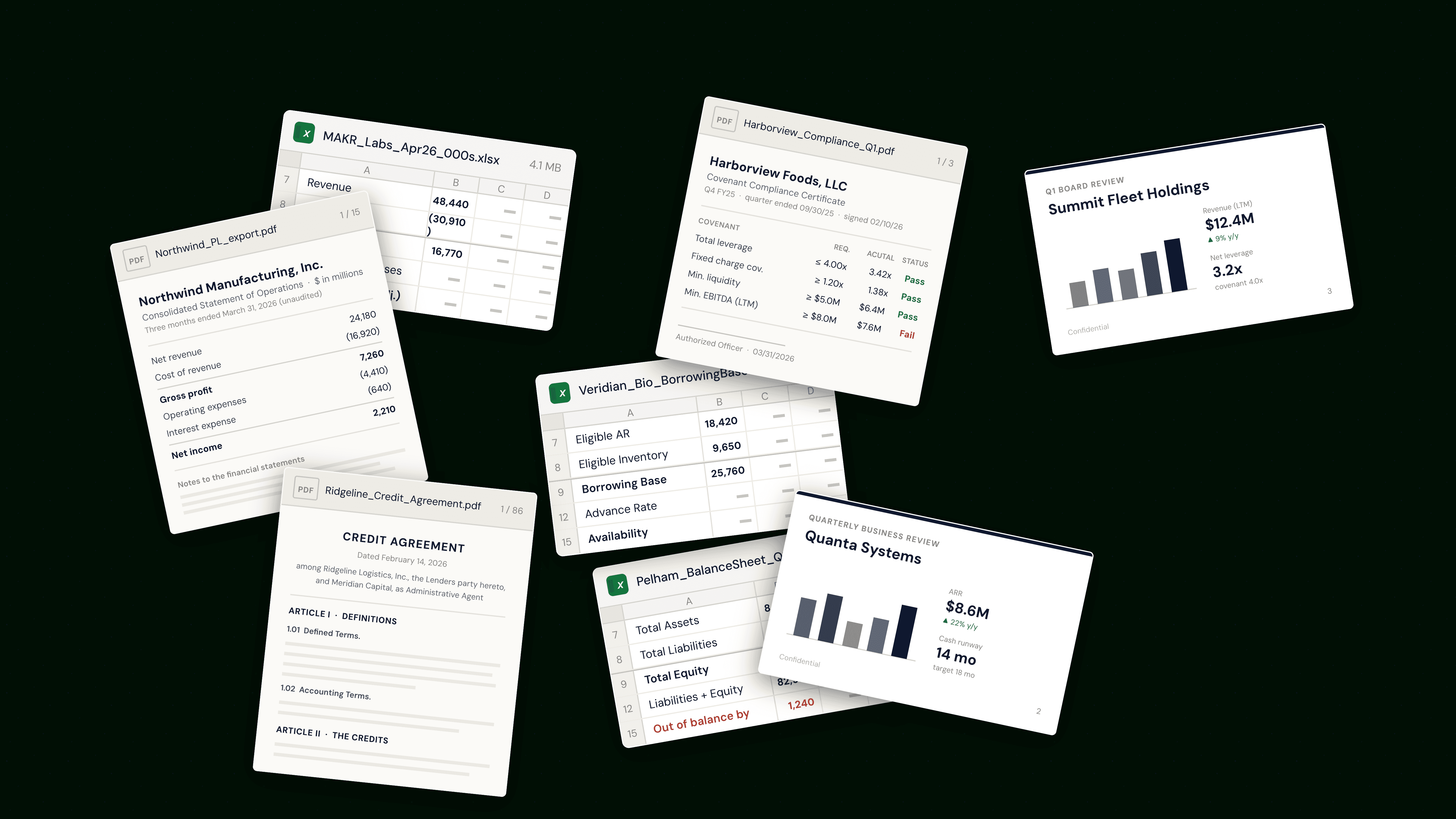
The verticals operated independently, each with their own cadence and monitoring requirements. But the manual process was the same everywhere: weeks of preparation that left little time for the analysis the reviews were supposed to enable. As the portfolio grew past a hundred companies, the process didn't just slow down. It started to break.
They needed something that could work immediately at the scale they were already operating.
Why Lumonic
Trinity had already implemented a legacy monitoring platform, but it was built for private equity and functioned mostly as a database. It centralized data reasonably well. What it couldn't do was collect or extract that data. Financials still had to be hand-keyed and spread into bespoke templates before the system could ingest them, which left someone chasing portfolio companies for statements and parsing them by hand.
Lumonic automates the part that the legacy system left manual. It spreads financials directly from source documents and pushes clean, traceable data downstream into dashboards and reports. For a business development company operating at scale, shortening the time from raw statement to portfolio insight was the deciding factor.
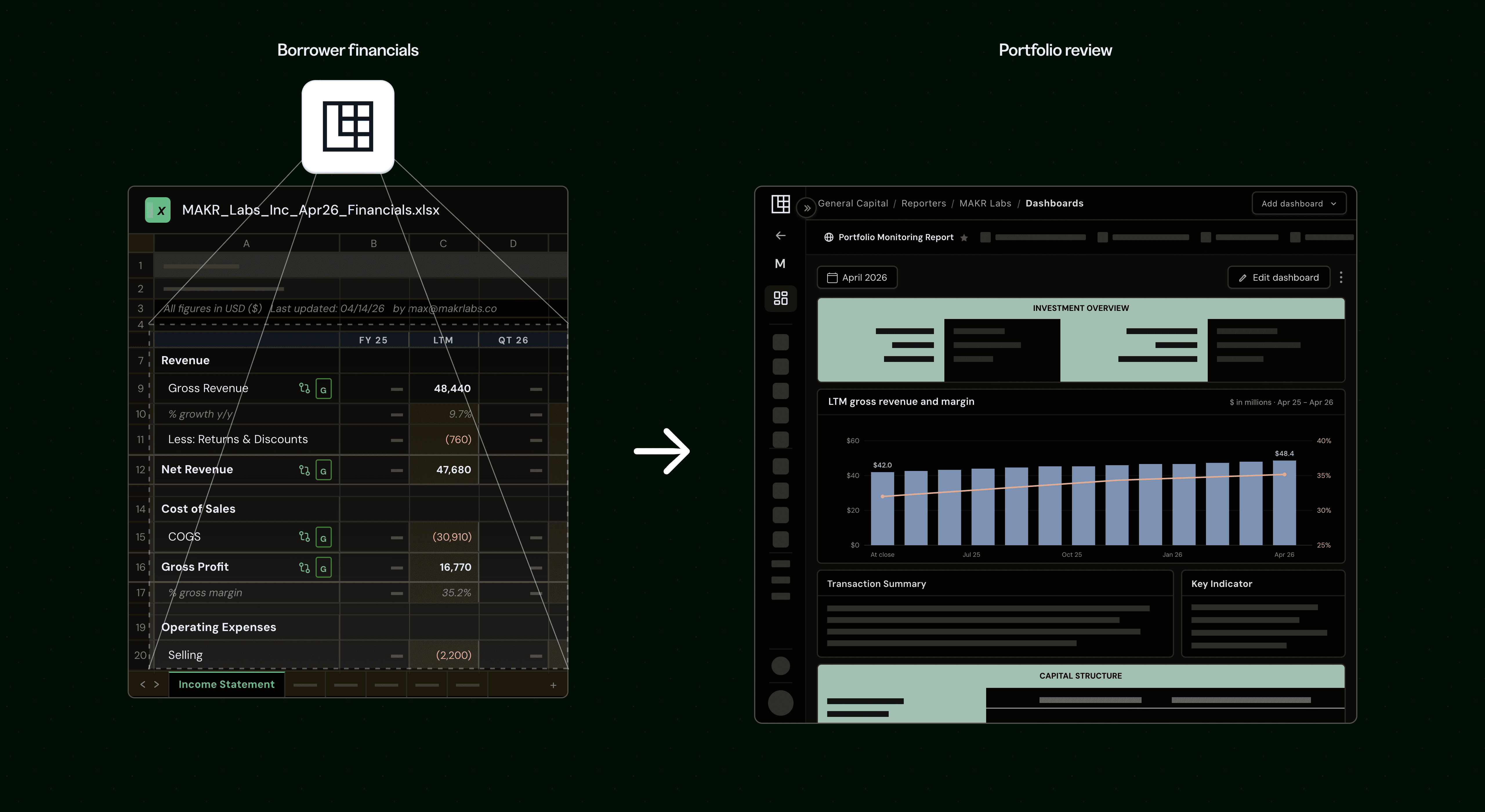
Trinity chose Lumonic for a few reasons:
Built for the complexity of a multi-vertical business development company. Not a single-template solution retrofitted from a broader portfolio management tool. Lumonic natively handled the mechanics that general platforms force into workarounds: multiple EBITDA definitions, covenant tracking with real thresholds, and varied reporting cadences.
Flexibility across strategies. Lumonic handled the distinct reporting needs of Trinity's five verticals and unified them in a single platform with standardized insights, so each team kept the nuances its strategy required without fragmenting the firm's view of the portfolio.
Embedded support. During compressed quarter-end timelines, the Lumonic team operated in Trinity's communication channels and responded in real time. That responsiveness, along with the depth of context the team built about Trinity's workflows, set the tone for the relationship.
The impact
Portfolio review: from assembly to analysis
This was the most visible shift. Portfolio managers who previously spent hours compiling data for each company now open Lumonic, pull up a report instance filtered to their name, and find their one-pagers already populated with actuals versus budget, margin trends, cash runway, covenant status, and various KPIs derived from company financials. They review, add commentary, and export a PDF.
The meeting starts with analysis, not with someone asking whether the numbers are current. And when a number comes into question, it traces back to the source document it came from. The audit trail that didn't exist before is now built into every figure.
After the other verticals had already built their report templates in Lumonic, the Life Sciences team was the last to make the switch, and they built their own one-pager from scratch, collaboratively deciding which data points mattered for their specific reviews.
Bank account dashboards and automated data collection
Bank account consolidation, once one of the most tedious parts of review prep, now rolls up automatically through dedicated dashboards built in Lumonic. Portfolio managers no longer key balances into Excel ahead of every meeting.
The same shift happened with data collection from portfolio managers. Inputs that previously required manual outreach and disconnected spreadsheets now flow through automated tasks directly into the system, feeding monthly and quarterly review preparation without anyone chasing them down.
A support team that knows the portfolio
Most vendor relationships have a gap between the people who build the product and the people who understand the business. With Lumonic, that gap closed quickly. When a portfolio manager flags that a value looks off, the response isn't a ticket number. It's a diagnosis, usually within the hour, often with a fix already applied.
When issues surfaced, whether dashboard values not populating or notifications not reaching the right people, the Lumonic team already understood Trinity's setup well enough to identify root causes and resolve them. But the more durable outcome was that they showed Trinity's team how to diagnose those issues independently going forward. The goal of the support wasn't to make Trinity reliant on Lumonic. It was to make Trinity self-sufficient. Over time, the relationship came to feel less like a help desk to escalate to and more like an extension of the credit operations team.
Scaling with Trinity's growth
Trinity's portfolio continues to expand, with new companies coming online and previously inactive entities being reactivated. New team members are onboarding across the verticals too. Lumonic has scaled with that growth. What started as a single-vertical rollout now runs automated workflows across the entire firm.
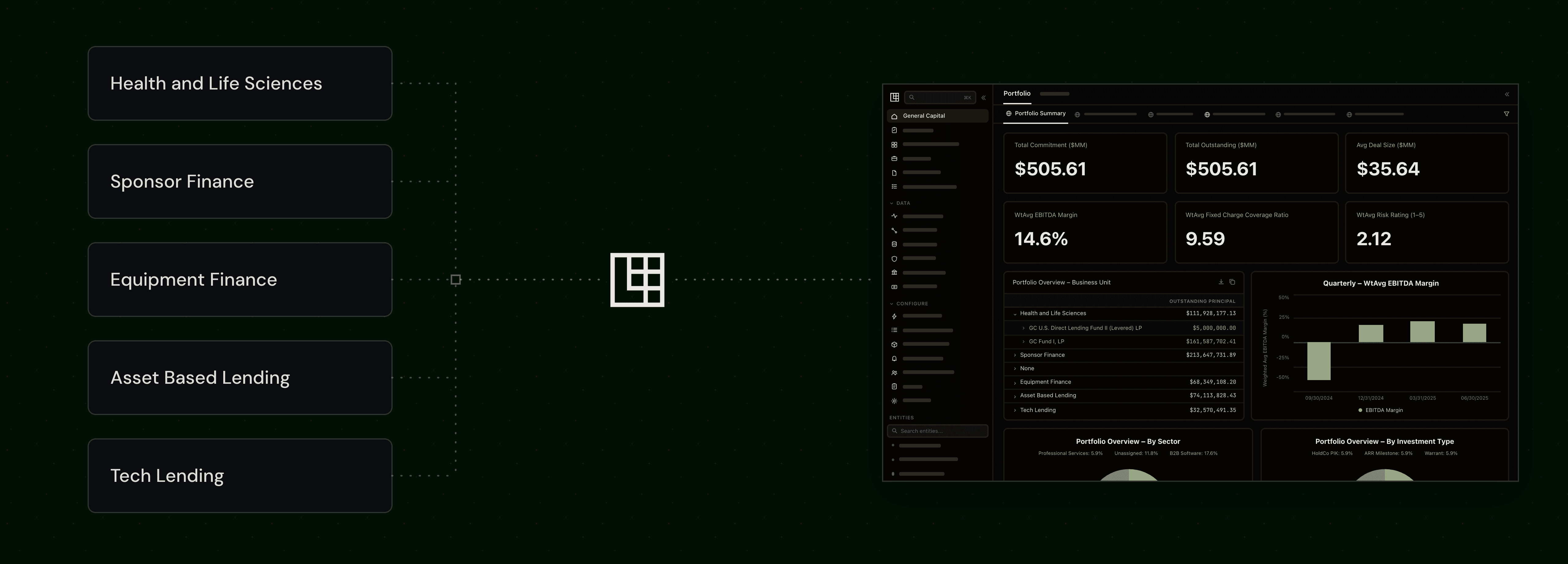
The team's stated goal is full self-sufficiency: handling mappings, dashboard builds, and data extractions independently. Trinity is working toward Lumonic as the single system of record for portfolio monitoring across every vertical, not a layer on top of existing systems but the foundation underneath them.
What's next
As the portfolio continues to grow, Trinity and Lumonic are working together on what comes next: deeper integrations with Trinity's existing systems and vertical-specific report templates, plus new workflows across the firm. The goal is straightforward: as the portfolio scales, the quality and speed of portfolio insights should scale with it.


